Podcast: Download (Duration: 39:41 — 90.8MB) | Embed
Subscribe: Apple Podcasts | Spotify | Android | RSS | More



This AIA-certified nano CEU is made possible by Columbia Forest Products. It focuses on
how fire retardant veneer core plywood actually works — from the pressure-treatment process to the self-extinguishing char-layer reaction — and why third-party certification, not a single passed test report, is what separates products that perform on paper from products that perform in a fire.
AIA’s Three Learning Objectives
- Distinguish between structural fire retardant treated wood (governed by IBC Section 2303.2) and decorative fire retardant treated wood products (governed by IBC Section 803), including the differing test durations and applications of each.
- Explain the difference between developmental testing and third-party certification for fire retardant wood products, and describe why third-party certification (including ongoing mill audits and annual retesting) provides architects and designers greater assurance of consistent life-safety performance.
- Identify the correct specification language for a Class A certified, third-party monitored fire retardant veneer core plywood product, and describe the flame spread index and smoke development index thresholds it must meet.
Course Details
- Course Number: CFP 2026-1
- Course Provider: Columbia Forest Products with Material Intelligence
- AIA Learning Units: 0.5 LU|HSW
- Designation: Health, Safety, & Welfare
- Course Type/Session Type: Nano CEU – Distance Learning / On Demand
About this episode
In this episode of Material IQ, host Kenn Busch sits down with Alicia Powell of Columbia Forest Products to unpack the first domestically manufactured, third-party certified Class A fire retardant veneer core plywood.
Powell, whose career spans both the structural and decorative sides of fire retardant wood, maps the two very different corners of the building code these products live in: IBC Section 2303.2, which governs structural framing members and demands pressure impregnation plus an ASTM E2768 burn test, and IBC Section 803, which governs decorative interior finishes like cabinets, millwork, and wall panels and requires the ASTM E84. Both share the same pass thresholds and the difference is time under flame, a distinction that still trips up specs written for the retired “E84 Extended.”
The heart of the conversation is the gap between developmental testing (one production run, one lab report, maybe an engineering opinion) and genuine third-party certification: 18 passed tests, an ICC-ES listing, mill-floor monitoring, signed samples, annual retesting, and unannounced audits that can pull the listing.
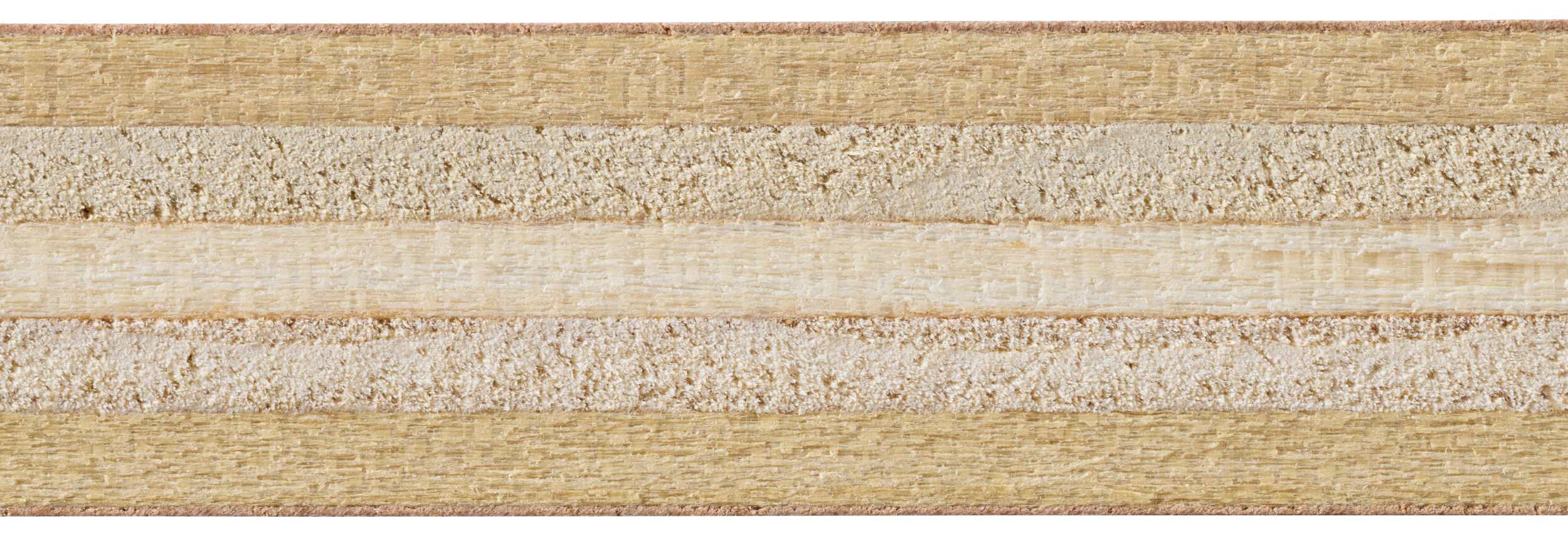
Powell also covers how individual poplar veneers are pressure treated before layup with Columbia’s soy-based, no-added-formaldehyde resin, why the finished panel reverts to Class C once a 1/42″ decorative face is applied while the core stays Class A, the roughly 15% weight penalty versus untreated poplar, the need to test your own adhesives and finishes on a small scale first, and the exact spec language architects should use so the product doesn’t get value-engineered out.
For more information and samples, email Alicia at [email protected].



Take the assessment for 0.5 CEUs
You do not have a time limit on these questions. You must score 100% to earn .5 units.
Material Intelligence will report directly to the AIA for credit. A certificate of completion will be emailed to participants allied with other associations.

Every episode of the Material IQ podcast explores in detail the materiality of the built environment: innovation, inspiration, and case studies from leading architects, designers, suppliers, and manufacturers with an emphasis on climate-positive outcomes in commercial and residential design.